
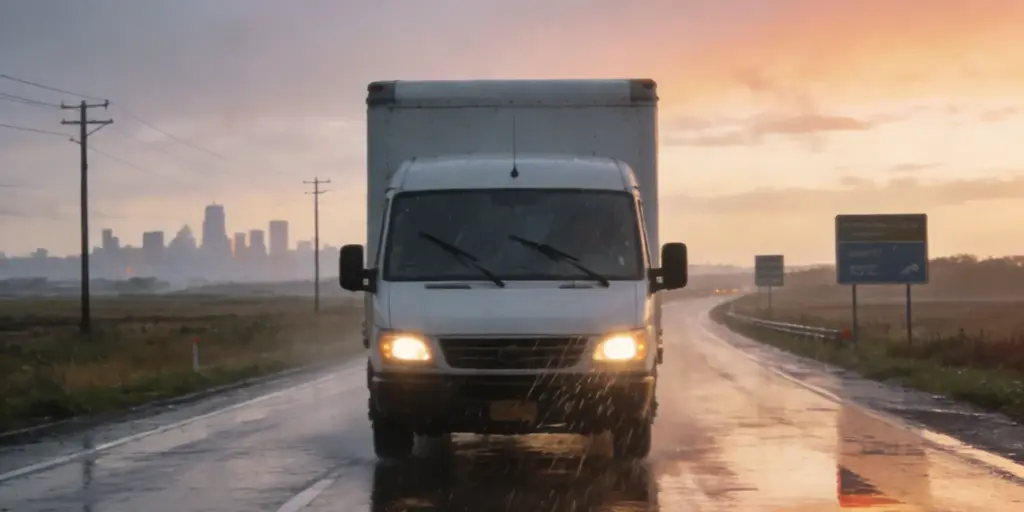
Last winter, I was stuck on I-80 in Wyoming, my rig’s alternator fried and cell service nonexistent. Before panic set in, I flipped on my Radio CB and keyed up Channel 19: “Breaker, breaker—this is Big Rig Bob near Exit 24, need a jump. Got a dead soldier under the hood, over.” Within five minutes, a fellow driver named Jake was behind me with jumper cables, saying, “Heard you loud and clear, buddy. 10-4 on the assist—we don’t leave anyone stranded out here. You got a ground ready?” That moment summed up why civilian radio isn’t just tech for truckers—it’s our lifeline, our community, our culture.
The Cultural Core: Three Pillars of the Radio Wave
Civilian radio in America, from CBs to ham sets, is built on values that mirror the trucking life: mutual assistance, sharing, and technological curiosity.
Mutual Assistance: More Than Static
When cell towers go dark in the Rockies or tornadoes take down lines in the Plains, radio keeps us connected. Channel 9, the federally designated emergency channel, is where lives get saved. Last year, a driver near Oklahoma City broadcasted: “Mayday, Mayday—multi-car pileup on I-40 westbound, mile marker 125. Multiple injuries, traffic blocked solid. Need EMS stat, over.” Within 10 minutes, 12 truckers had rerouted to block oncoming traffic and render first aid. “I’m setting up a safety zone—all units keep clear of the crash scene,” one driver relayed. This isn’t an exception—it’s tradition.
Amateur radio operators (hams) take this further. During Hurricane Ian, ham networks relayed supply requests from truck stops to relief centers when cell service collapsed. “QSL, we’ve got 50 cases of water needed at the Loves in Fort Myers,” a ham operator transmitted. “ETA on delivery is two hours—stand by.” As one ham put it: “Our license isn’t just permission to transmit—it’s a promise to help.”
Sharing: The Language of the Road
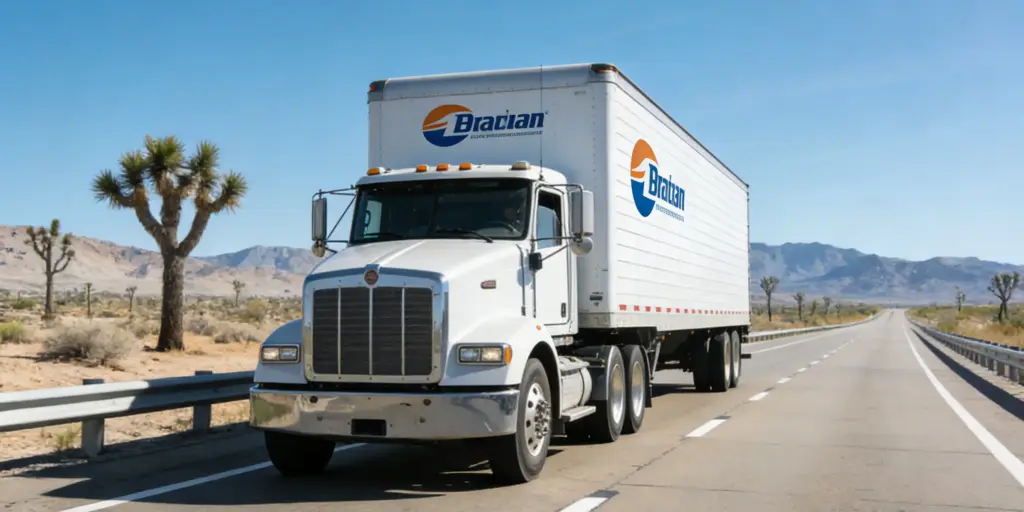
Truckers speak in code for efficiency, and radio turned that into a culture. Beyond “Bear trap ahead” (speed trap) and “Chicken coop open” (active weigh station), we’ve got a whole dictionary: “Smokey Bear” refers to a state trooper, “Four-wheeler” is a passenger car, “Rubber duck” is a rookie driver, and “Greasy spoon” is a no-frills diner. “Rolling coal” means a diesel truck is blowing black smoke, while “Deadhead” describes driving an empty trailer. These phrases aren’t just slang—they’re shared knowledge that keeps us safe.
Beyond warnings, we share the little things: “Best coffee in Utah at Exit 117—greasy spoon there serves pie that’ll make you weep” or “Avoid the diesel at that Loves—pumps are broken, got a bad batch of go-go juice last week.” On 12-hour hauls, these snippets turn isolation into camaraderie. A 2025 survey found 54% of truckers use CBs daily just for this kind of connection. “10-20 on your location?” someone might ask, and another replies: “10-20 is mile marker 89 on I-5 north—just passed the dairy farm. You in the red Peterbilt?”
Technological Exploration: From Spark Transmitters to FM
The radio ecosystem thrives on innovation. CB radios, born from WWII military tech, evolved from AM to FM in 2021 for clearer audio. Hams, meanwhile, pioneered shortwave communication—once deemed “useless” by the 1912 Radio Act, now critical for cross-country relays.
Truckers are part of this evolution too. We modify antennas for better range in canyons and sync radios with GPS to share real-time locations. “Tweaked my whip antenna last month—now I can reach 25 miles in the Rockies,” says Tom, a driver out of Colorado. “Why buy a fancy sat phone when you can tweak a $50 CB to reach 20 miles? 10-4 on that savings.”
Community Organizations: Where Radios Meet Faces
Radio isn’t just airwaves—it’s a network of people who gather offline too. Groups like the American Radio Relay League (ARRL) turn lone operators into a community.
Member Perks That Matter
ARRL membership comes with tools tailored to drivers: free access to the Learning Center’s emergency communication courses, digital archives of QST magazine (with gear reviews dating to 1915), and weekly newsletters with road-specific radio tips—like how to use “Q codes” (QSY = change frequency, QRL = is this frequency in use?) for ham communication. Student memberships even help young drivers learn radio tech for their careers.
Local clubs add more: in Texas, the Lone Star Truckers Ham Club offers free antenna tune-ups at truck stops. “Saved me $100 last month,” says Maria, a long-haul driver. “Plus, they taught me to fix a dead radio mid-trip—now I can troubleshoot a static signal before it turns into a silent ride. 10-4 on their expertise.”
Activities That Build Bonds
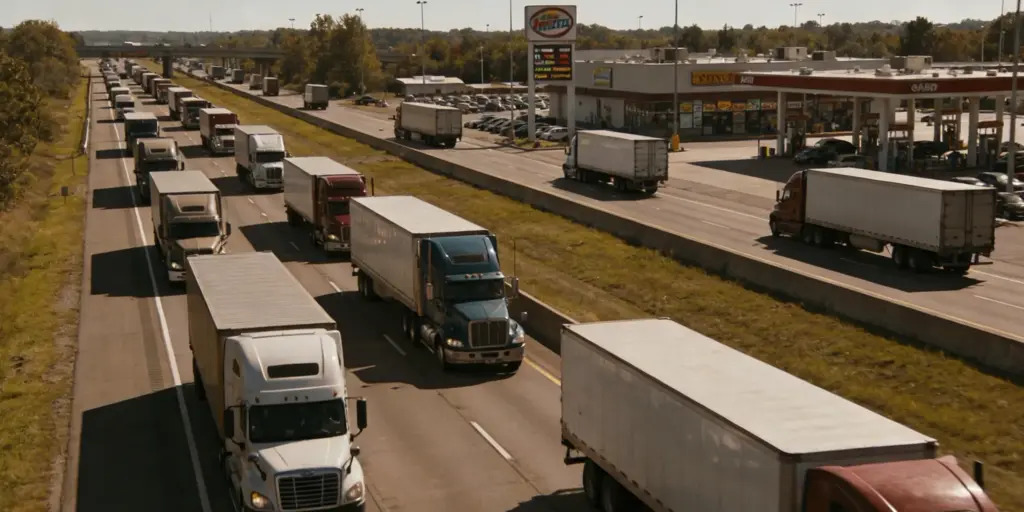
The crown jewel of the radio community is Field Day, a national event where operators set up temporary stations to test emergency readiness. For truckers, it’s part competition, part reunion. Last June, I joined 30 drivers at a Kansas fairground, running a station from the back of my rig. We competed to make the most contacts in 24 hours—calling out “CQ Field Day, CQ Field Day” to reach operators nationwide—but mostly we swapped stories and calibrated each other’s radios. “Your SWR is off—tweak that antenna 10 degrees left,” Jake advised me. “Now you’re talking loud and clear, no static.”
Local clubs host smaller events too—“coffee and code” meetups at Pilot Flying Js, where newbies learn 10-codes (10-1 = “receiving poorly,” 10-3 = “stop transmitting,” 10-7 = “out of service”) over breakfast. These gatherings turn “voice on the radio” into “friend at the next stop.” “I used to freeze up when someone said ‘10-9,’” admits Lila, a new driver. “Now I can fire back ‘10-4, repeat your last message’ without thinking. Thanks to these meetups, I’m not a rubber duck anymore.”
Truckers, Tech, and Drills: Radio in Action
For us, radio isn’t just social—it’s integral to how we work, especially with tools like Trucker Path and emergency drills.
Trucker Path + Radio: The Dynamic Duo
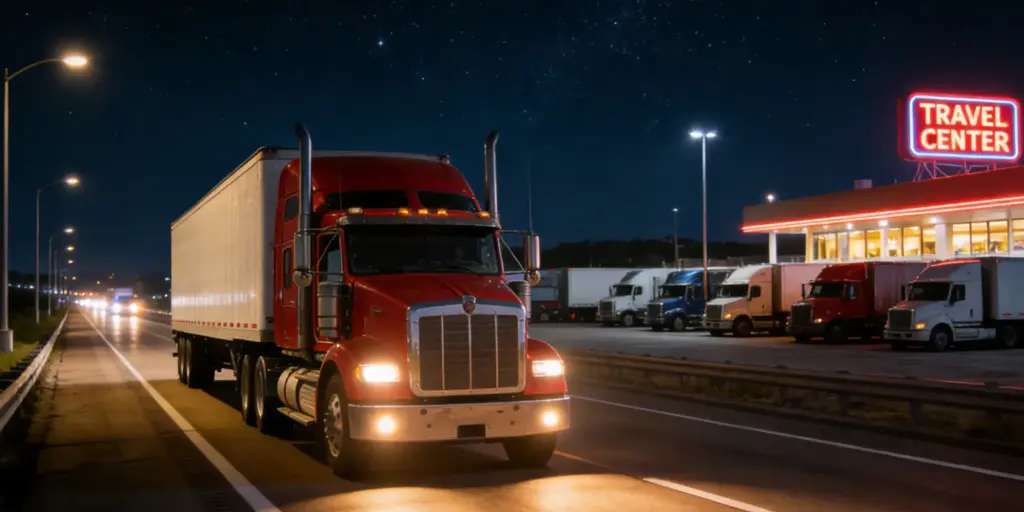
Trucker Path’s app is great for finding parking, but it can’t beat radio for real-time updates. When the app shows a truck stop has spots but a driver on Channel 17 says, “It’s full—they’re turning folks away, 10-33,” we trust the radio. “10-33” means emergency, but in this context, it’s an urgent warning. Many drivers sync their app alerts to their CBs: if Trucker Path flags a closed rest area, a voice prompt goes out over the radio to everyone nearby: “Rest area at Exit 45 closed—10-20 to the nearest open stop is Exit 58.”
Jake, the driver who helped me in Wyoming, uses a custom setup: “My radio pings Trucker Path’s database for weigh station statuses and broadcasts them automatically. ‘Chicken coop open at mile marker 62—Smokey’s checking logs,’ it says. Saves me 20 minutes a day from sitting in line. 10-4 on that time saver.”
Emergency Passage Drills: Radio as a Coordination Tool
Every year, the Missouri Trucking Association includes radio drills in its driving championships. Last year’s event tested drivers on relaying accident locations via Channel 9 and coordinating with first responders. I participated and learned to transmit grid coordinates from my GPS—something no app teaches you. “Accident at 38.5621° N, 92.1868° W—two four-wheelers and a rig, no injuries but traffic blocked,” I practiced relaying. “Requesting tow trucks and traffic control—10-4 on your response.”
These drills aren’t just for competition. After a tornado blocked I-70 in Kansas, we used the same protocols: one driver directed traffic on Channel 19 (“All units merge left, single file—10-33, debris on right lane”), another relayed to emergency services on Channel 9, and others used ham radios to update state troopers. “QSL, we’ve cleared a path for EMS—ETA 5 minutes,” a ham operator reported. We cleared the road in half the time it would have taken without radio coordination.
Why We Still Talk Over Static
Smartphones and satellite communicators are handy, but they lack the soul of radio. When you key up a CB, you’re not just sending a message—you’re joining a legacy. From the 1970s oil embargo, when truckers used radios to find gas stations (“10-20 on the nearest open pump?”), to today’s winter storms, radio has kept us connected.
It’s the sound of a stranger offering help (“10-4, I’m on my way with a jump”), the thrill of fixing a finicky antenna (“Finally got that SWR right—no more static!”), the joy of seeing a radio buddy at Field Day. For truckers, civilian radio isn’t just technology—it’s who we are.
Next time you hear “Breaker, breaker” on the highway, know this: you’re listening to America’s most reliable community, one transmission at a time.
Got a radio story? Drop it in the comments—I’d love to share it on my next trip! And if you’ve got a favorite CB slang term I missed, 10-4 on that too.